
Mould at Home in Singapore: Why It Keeps Coming Back (and How to Clean It Safely)
Black spots on the bathroom ceiling, a musty wardrobe, fuzzy bags? A kiasu, fact-checked guide to why mould keeps returning in Singapore homes, how to clean small patches safely, what not to do with bleach, and when a dehumidifier actually helps, with Kiasu Ah Huat.
Updated 24 October 2026
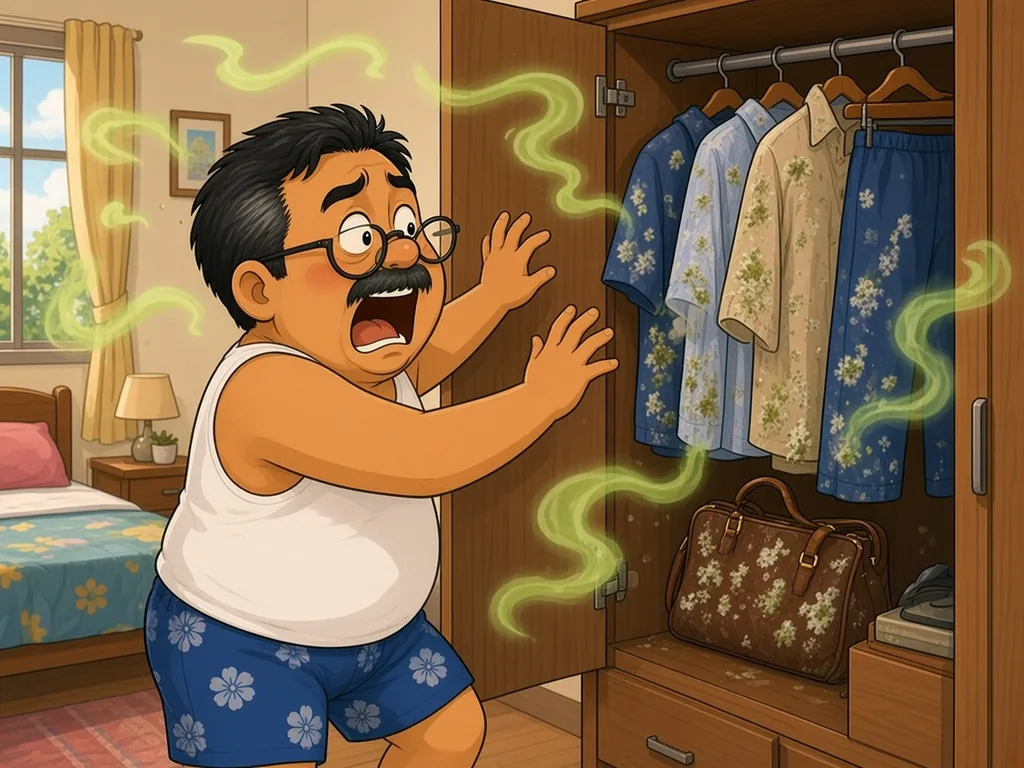
You scrubbed the black spots off the bathroom ceiling at Chinese New Year. By the June school holidays, they're back, like they never left. Then you open the wardrobe and your good leather bag has grown a fuzzy white coat. Sian. Mould is one of the most common complaints in Singapore homes, and most of us fight it the wrong way: scrub hard, spray something strong, repeat forever.
Your guide once again is Kiasu Ah Huat, our (fictional) everyday Singaporean who reads the fine print so you don't lose out. Look out for "Ah Huat's Kiasu Tip" along the way.
Why mould keeps coming back
The US Environmental Protection Agency (EPA) puts it in one line: "The key to mold control is moisture control." If you clean up the mould but don't fix the water problem, the EPA says the mould will most likely come back. It also notes that it's impossible to get rid of all mould spores indoors. Spores are everywhere; they only grow when they find moisture.
Singapore gives them plenty of moisture. According to the Meteorological Service Singapore (MSS), we have high humidity all year round: relative humidity is often above 90% in the early morning, the annual mean is around 82%, and it frequently reaches 100% during prolonged rain.
So the real fight isn't "mould vs bleach". It's mould vs damp.
Ah Huat's Kiasu Tip: Scrubbing without fixing the damp is like mopping while the tap is still running. Find the water first.
Where mould shows up, and what's usually behind it
| Where you see it | What the moisture is often from | What to do |
|---|---|---|
| Bathroom ceiling and grout | Shower steam with poor ventilation | Run the exhaust fan or open the window when showering; clean more often (EPA) |
| Kitchen walls and cabinets | Cooking steam | Use the exhaust fan or open windows when cooking (EPA) |
| Windows, walls, cold pipes with water droplets | Condensation, which can be a sign of high indoor humidity | Bring humidity down and wipe surfaces dry (EPA) |
| Around the aircon | Dirty drip pan or blocked drain line | Keep drip pans clean and drain lines flowing (EPA) |
| Ceiling stain that keeps growing | A leak, possibly from the flat above or common property | For common property, contact your Town Council (HDB) |
| Wardrobes, bags, shoes | Damp air sitting in a closed space | Lower room humidity; air things out |
On ceiling leaks, HDB's ceiling leaks page says flat owners are responsible for the upkeep and maintenance of their flats, and for leaks from common property, you should contact your Town Council. A stain that grows after every rain or every time the upstairs neighbour showers is a leak problem, not a cleaning problem.
How damp is too damp?
The EPA recommends keeping indoor relative humidity below 60%, ideally between 30% and 50%, and suggests measuring it with an inexpensive humidity meter. It also says to use air conditioners and/or dehumidifiers when needed. Water-damaged areas and items should be dried within 24 to 48 hours to prevent mould growth.
Given MSS's numbers above, getting a Singapore room below 60% usually means running something, whether that's the aircon or a dehumidifier, with windows closed while it runs.
Cleaning a small patch safely
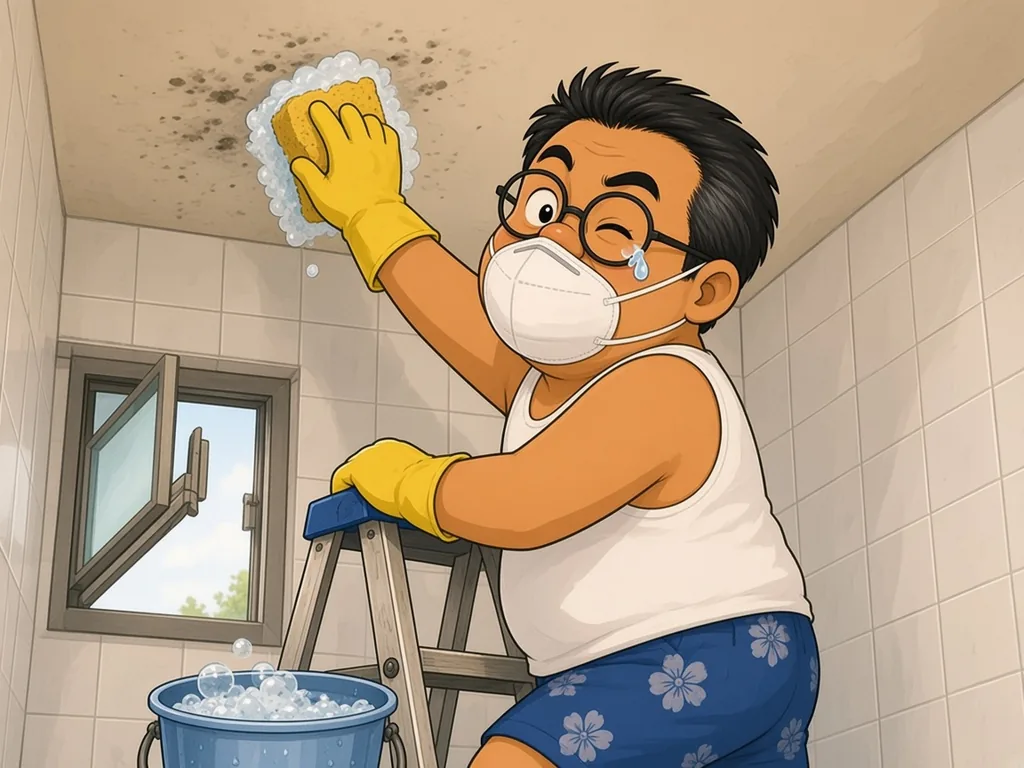
The EPA says that if the mouldy area is less than about 10 square feet (roughly a 3 ft by 3 ft patch), in most cases you can handle the job yourself. Here's what the EPA and the US Centers for Disease Control and Prevention (CDC) 8 tips to clean mold recommend:
- Protect yourself. Wear gloves, goggles and a mask. The EPA specifically suggests an N-95 respirator, goggles without ventilation holes, and avoiding touching mould with bare hands.
- Air it out. Open windows; the CDC suggests using fans and dehumidifiers to help remove moisture.
- Scrub with water and detergent on hard surfaces, then dry completely right away.
- Don't just cover it. The EPA says not to paint or caulk over mouldy surfaces. Clean and dry first, or the paint will likely peel.
- Porous stuff may have to go. Absorbent materials like carpet that become mouldy may need to be thrown away, because mould can fill the tiny spaces in them.
What about bleach?
This is where many people kena. The EPA says using a biocide such as chlorine bleach is not recommended as a routine practice during mould cleanup, though there may be cases where professionals judge it necessary. It also warns that dead mould can still cause allergic reactions in some people, so killing it isn't enough; it must be removed.
And the big one: the CDC and EPA both warn never mix bleach with ammonia (or cleaners containing ammonia), because it produces toxic fumes. The CDC goes further: don't mix cleaning products at all.
Ah Huat's Kiasu Tip: "Add a bit more of that other cleaner, sure stronger." No! Mixing products can make toxic gas. One product, read the label, window open.
Is it affecting your health?
According to the EPA, mould produces allergens and irritants. In sensitive people it can cause hay-fever-type symptoms such as sneezing, runny nose, red eyes and skin rash, and it can trigger asthma attacks in people with asthma who are allergic to mould. If someone at home has symptoms, see a doctor, and don't let them do the scrubbing.
When should you call in help?
- The patch is bigger than about 10 square feet (EPA's rough DIY limit).
- The mould keeps returning because of a leak you can't fix yourself.
- You suspect the aircon system itself is contaminated. The EPA advises not to run the system if you know or suspect it's contaminated with mould, because it could spread mould through the home.
Where a dehumidifier fits in
A dehumidifier doesn't clean mould. What it does is the moisture-control part: it helps you keep a room below that 60% line, especially rooms the aircon doesn't cover, like store rooms, bedrooms with big wardrobes and rooms where you dry laundry. Pair it with ventilation in the bathroom and kitchen and you're attacking the root cause, not just the spots.
For capacity, compressor vs desiccant, laundry mode and drainage, read Ah Huat's guide to choosing a dehumidifier.
Our picks
Paiseh, no pick yet. We haven't tested dehumidifiers or humidity meters hands-on. We're researching and comparing models from spec sheets and owner reviews before we recommend anything for Singapore homes. Rather than show a placeholder link, here's where our recommendation will go:
Product pick coming soon
We'll add a recommendation here once we're confident in it.
Pros
- Recommendation coming soon
Cons
- Not yet published — check back soon
Ah Huat's quick mould checklist
Screenshot this and stick it on the fridge — Ah Huat would.
- Find the water first: steam, condensation, aircon drip pan, or a leak?
- Ventilate the bathroom when showering and the kitchen when cooking.
- Measure humidity; aim for below 60% (EPA).
- Dry wet things within 24–48 hours.
- Small patch: gloves, goggles, mask, detergent and water, then dry completely.
- Never mix bleach with ammonia or other cleaners.
- Don't paint over mould.
- Big patch, recurring leak or mouldy aircon system? Get help.
Looking for more? Ah Huat has also done his homework on dehumidifiers and air purifiers. Get the damp under control and your home stays shiok — and so does your wardrobe.