
Robot Vacuum vs Cordless Stick Vacuum: Which One Fits Your Singapore Home?
Robot or stick? A kiasu, scenario-based comparison for Singapore flats — busy working couples, pet owners, families with toddlers, and homes full of clutter — plus the lithium-ion battery safety and disposal rules both types share, from CPSO and NEA, with Kiasu Ah Huat.
Updated 24 October 2026
Every few months the family group chat has the same debate. Ah Huat's son: "Buy robot lah, it cleans while we're at work." Ah Huat's wife: "Robot cannot clean the sofa, buy the stick one." Ah Huat: "Can I buy both or not?" (His wallet: "No.")
Your guide once again is Kiasu Ah Huat, our (fictional) everyday Singaporean who reads the fine print so you don't lose out. Look out for "Ah Huat's Kiasu Tip" along the way. There's no universal winner here — it depends on how your home works. So instead of a spec war, Ah Huat compares them by real-life scenario.
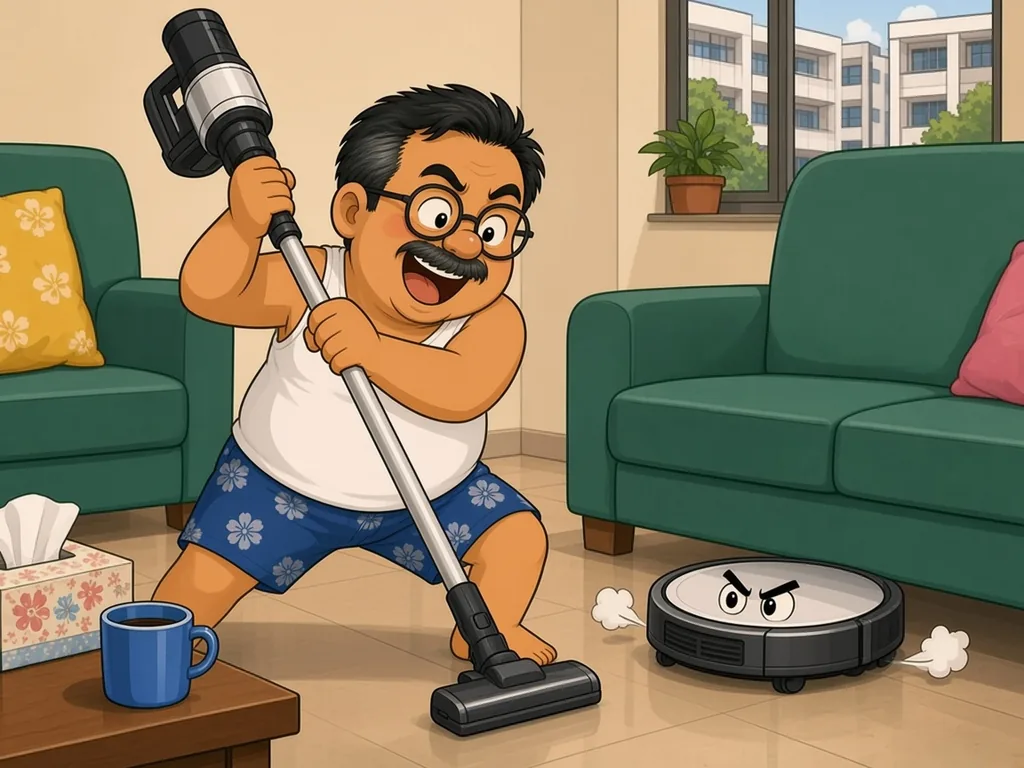
The basic difference
- A robot vacuum runs on its own, on a schedule, and goes back to its dock to charge. You don't push it, but your floor has to be ready for it.
- A cordless stick vacuum is one you hold and push yourself. Many convert into a handheld. You decide exactly where it goes — and you do the work.
Both usually run on rechargeable lithium-ion batteries, which matters for safety (more on that below). Ah Huat's guide to choosing a vacuum cleaner covers the other types, the SAFETY Mark, HEPA claims and suction numbers.
Which one for which home?
| Your situation | Robot vacuum | Cordless stick vacuum | Ah Huat's lean |
|---|---|---|---|
| Both of you work long hours | Can run on a schedule while you're out | You need to find time to clean yourself | Robot |
| Floor full of cables, toys, socks | Needs a clear floor first | You simply steer around things | Stick |
| Spills and crumbs right now | You'd have to start it and wait | Grab it and clean immediately | Stick |
| Sofas, mattresses, car seats, shelves | Floors only | Handheld mode can reach these (check the model) | Stick |
| Low sofas and beds | Check its height against the gap | Reach under with the wand | Depends on your furniture |
| You want the floor 'kept' clean daily | Regular light cleaning without effort | Only if you're disciplined | Robot |
| Elderly parents who find pushing tiring | Less physical effort once set up | Still needs lifting and pushing | Robot |
Ah Huat's Kiasu Tip: Be honest about your floor. If your living room is a minefield of toys and cables every evening, a robot will spend its life getting stuck. Kiasu move: try clearing the floor for one week before buying a robot. If you can't keep it up, buy the stick.
Scenario thinking, Ah Huat style
The "nobody's home in the day" household. A robot that cleans on a schedule while you're at work is the whole point. Measure the gap under your sofa and bed and compare it with the robot's height on the spec sheet, and check what door thresholds it can handle.
The "spill happens every five minutes" household (hello, toddlers). A stick vacuum wins for instant clean-ups. Crumbs under the high chair don't wait for the robot's schedule.
The "everywhere except the floor" household. Sofa cushions, mattresses, shelves, the car — a stick that converts to a handheld covers these. A robot only does floors.
The "we want both" household. As Ah Huat says in his main guide, many homes end up with a robot and a handheld or stick. If that's you, budget for it from the start rather than buying twice.
Battery safety: the part both types share
Whichever you choose, you're bringing a lithium-ion battery into your home — and charging it there regularly. Singapore's Consumer Product Safety Office (CPSO) has safety tips on lithium-ion batteries that specifically mention vacuum cleaners. CPSO says these batteries can overheat or explode if incorrectly used, charged or damaged, and that lithium-ion battery fires can be hard to extinguish and dangerous.
Before buying (CPSO):
- Check whether the device has been recalled in any region — CPSO's website has product safety alerts and recall notifications.
- Verify that the device's AC adaptor (charger) has a valid SAFETY Mark.
- Buy from sellers that offer aftersales service.
Using and charging (CPSO):
- Use only the manufacturer's charger and battery, follow its instructions, and never modify or tamper with the battery.
- Don't charge a battery that looks damaged — bloated or swollen, leaking, or excessively hot during charging.
- Monitor charging and unplug when fully charged.
- Never charge under a pillow, bed or couch, which can restrict airflow and cause overheating and fire.
- Avoid dropping the device, and keep it away from direct sunlight, heat sources and moisture.
- Inspect regularly for damage, leakage or unusual odours. If something's not right, stop using it and contact the authorised distributor or service provider.
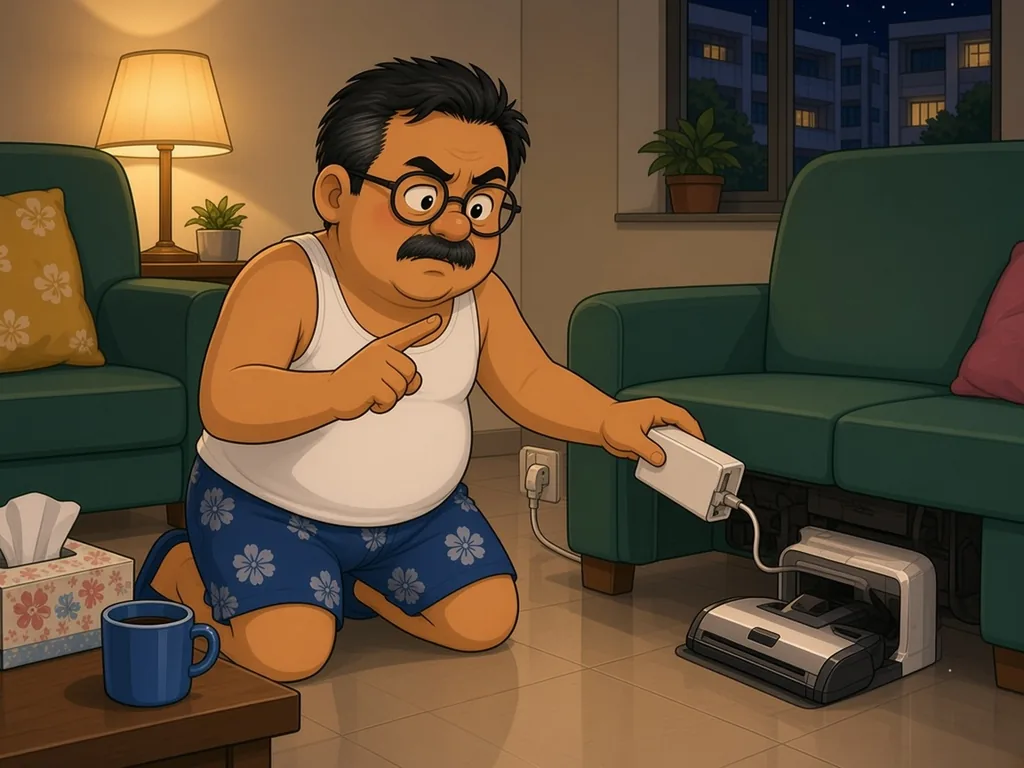
Ah Huat's Kiasu Tip: Give the charger or dock a proper home — out in the open, not squeezed behind cushions or under the bed. Robot docks and stick wall-mounts both need a power point, so plan where that is before buying.
When it's time to say goodbye: disposal
CPSO says don't throw batteries into general bins or blue recycling bins, as that may create fire hazards. Tape the ends of batteries before recycling.
The National Environment Agency's where to recycle e-waste page says small household appliances — it names "vacuum machine" as an example — aren't accepted at ALBA's collection events, and should go through the bins and collection avenues of e-waste recyclers Metalo, KGS and Virogreen. ALBA's e-waste collection drives do accept standalone rechargeable batteries. ALBA's in-store e-bins only take small batteries (AA, AAA, AAAA, D, C, 9-volt and button cells). Check NEA's page for the latest locations and rules.
Our picks
Paiseh, no pick yet. We haven't tested robot or stick vacuums hands-on. We're researching and comparing models from spec sheets and owner reviews before we recommend anything for Singapore homes. Rather than show a placeholder link, here's where our recommendation will go:
Product pick coming soon
We'll add a recommendation here once we're confident in it.
Pros
- Recommendation coming soon
Cons
- Not yet published — check back soon
Ah Huat's quick checklist before you buy
Screenshot this and bring it to the shop — Ah Huat would.
- Who's home in the day? Nobody → robot looks good.
- Floor usually cluttered? → stick, or commit to clearing it.
- Need sofa, mattress or car cleaning? → stick with handheld mode.
- Robot: measure under-furniture gaps and check thresholds.
- Check for recalls and a SAFETY Mark on the charger.
- Plan a charging spot in the open — never under the bed or sofa.
- Old battery or vacuum? Not in the general or blue bin — use NEA's e-waste channels.
Looking for more? Ah Huat has also done his homework on vacuum cleaners and air purifiers. Get these right and your home stays shiok — and so does your wallet.