
How to Choose a Water Filter or Purifier in Singapore (HDB & Condo Guide)
A kiasu, no-nonsense guide to water filters and purifiers for a Singapore home — why tap water is already safe, tap-mounted vs jug vs under-sink vs RO vs UV, hot and cold dispensers, NSF certifications, filter replacement costs, installation in HDB and rented flats, and hygiene, with tips from Kiasu Ah Huat.
Updated 24 October 2026
You pour a glass of water from the kitchen tap and — eh, why got a faint "swimming pool" smell? Then the family chat forwards a roadshow video claiming tap water is "dirty", and someone asks: "Should we buy a water purifier? Which one?" Before you rush to the mall, take a breath. Filters can make water taste nicer and life more convenient, but they are not a rescue mission. Here's what each type actually does, so you don't kena con.
Your guide once again is Kiasu Ah Huat, our (fictional) everyday Singaporean who reads the fine print so you don't lose out. Look out for "Ah Huat's Kiasu Tip" along the way.
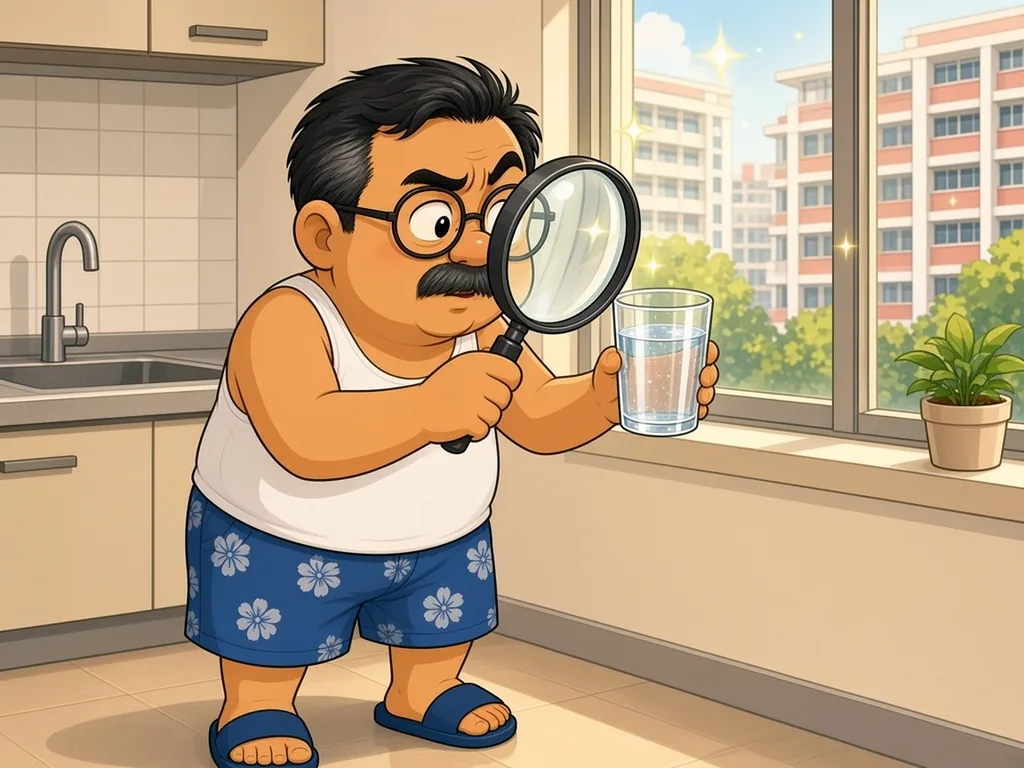
First things first: Singapore tap water is already safe
This is the most important point, so we'll say it upfront. According to PUB, Singapore's National Water Agency, our tap water is well within the Food Safety and Security (Non-Packaged Drinking Water) Regulations 2025 and the World Health Organization (WHO) Guidelines for Drinking-water Quality, and is safe to drink directly from the tap without further filtration. PUB conducts close to 500,000 tests a year.
What about NEWater? PUB explains that NEWater is mainly used by industry and for air-con cooling. During dry periods it is added to reservoirs and treated again at the waterworks before reaching your tap.
So a filter is not about making unsafe water safe. It's about taste, smell, convenience and peace of mind. The US CDC puts it simply: if your tap water doesn't contain harmful germs or chemicals, you may not need a filter.
So why do people still buy one?
- Chlorine-type taste or smell. PUB disinfects treated water with chlorine or ozone, and adds ammonia to form chloramines, a more stable chlorine residual. Some people notice the taste. Reducing chlorine, chloramine, taste and odour is exactly what NSF/ANSI 42-certified filters are tested for (more on that below).
- Older building pipes. PUB says discoloured water can come from corroded service pipes or fittings, or water left stagnant in the pipes, e.g. after a holiday. Its advice: run the tap until the water is clear, and call 1800-CALL-PUB if it doesn't clear. A filter is not a fix for bad pipes.
- Convenience. Chilled or hot water on demand, no more lugging bottled water home.
Note that the CDC says some filters can also remove beneficial chlorine and fluoride. PUB adds fluoride as a Ministry of Health requirement to prevent dental cavities.
The main types of filter and purifier
| Type | How it works | Installation | Things to know |
|---|---|---|---|
| Pitcher / jug | Pour water through a cartridge | None | CDC says these typically use carbon mainly to improve taste and smell; most aren't designed to remove germs |
| Tap-mounted | Cartridge clips onto your kitchen tap | Usually DIY | Filters only the water from that tap |
| Countertop | Sits beside the sink, fed by a hose or filled by hand | Light | Takes up counter space; check what it is certified for |
| Under-sink | Plumbed into the water line, often with its own faucet | Plumbing work | Out of sight; may need a licensed plumber |
| Reverse osmosis (RO) | Pushes water through a very fine membrane | Plumbing work, plus a drain line | Produces reject water; also removes minerals and may reduce fluoride |
| UV | UV light disinfects the water | Varies | Targets germs, not chemicals; works better with a pre-filter |
| Hot & cold dispenser | Stores, heats and chills water, often with a built-in filter | Varies by model | Judge the filter inside, and keep the tanks clean |
Reverse osmosis (RO). The CDC says RO removes parasites, bacteria and viruses, and some chemicals such as lead, copper and sodium. It may also reduce fluoride, calcium, magnesium and potassium — so RO water is very "clean", but the minerals are gone too. RO also uses more water: the US EPA's WaterSense programme says a typical point-of-use RO system generates five gallons or more of reject water for every gallon treated, some up to 10. WaterSense-labelled systems (a US label) send 2.3 gallons or less down the drain per gallon treated. The EPA notes that plain filtration may be enough, using little or no extra water.
UV. The CDC says UV systems with pre-filtration remove parasites, bacteria and viruses, but do not remove chemicals, and that systems which filter the water before the UV stage work better.
Hot & cold dispensers. Think of these as an appliance plus a filter. Heating and chilling are convenience; for water quality, check what the filter inside is certified for.
Ah Huat's Kiasu Tip: Words like "purifier", "alkaline" or "10-stage" on the box don't tell you much. What matters is what the filter is certified to reduce. No cert, no proof.
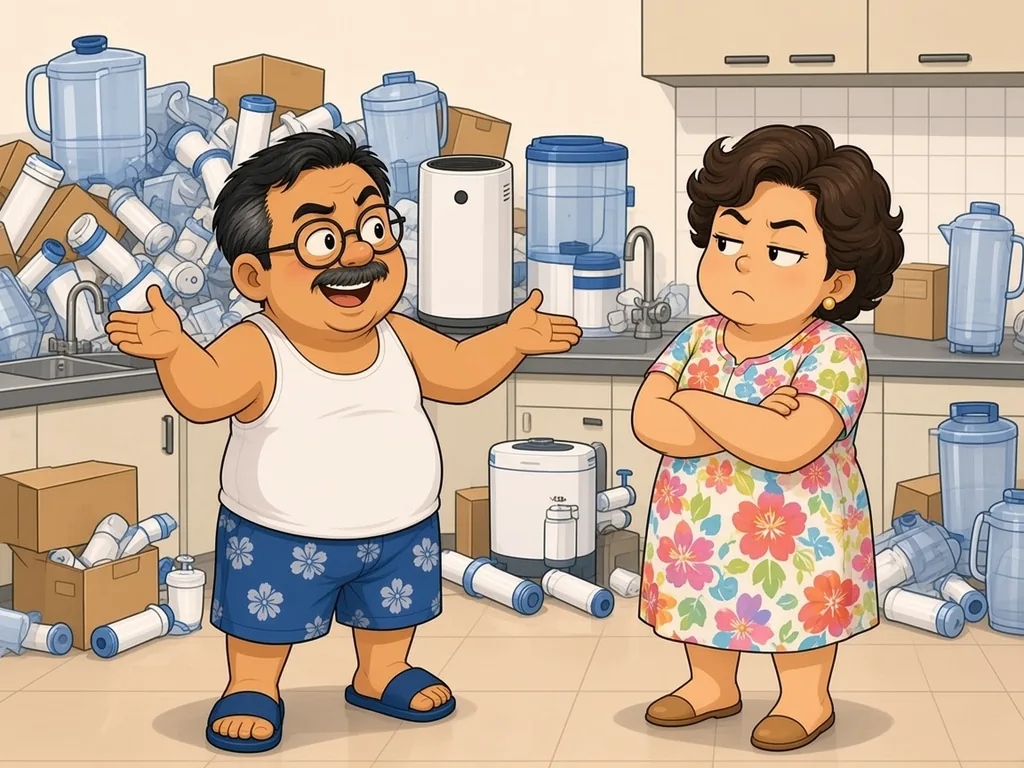
What the NSF certifications mean
NSF tests and certifies water treatment products. NSF explains its main standards like this:
| Standard | What it covers | Examples of claims |
|---|---|---|
| NSF/ANSI 42 | Aesthetic (non-health) effects | Chlorine, chloramine, taste and odour, particulates |
| NSF/ANSI 53 | Health-related contaminants | Over 50 possible claims, e.g. lead, Cryptosporidium, VOCs |
| NSF/ANSI 58 | Reverse osmosis systems | TDS reduction required; optional claims such as lead, arsenic, fluoride |
| NSF/ANSI 401 | Emerging / incidental contaminants | Up to 15, e.g. some medications, herbicides, pesticides |
Details for RO are on NSF's NSF/ANSI 58 page. NSF also stresses that the numbers reflect the order the standards were developed, not a ranking, and that certification doesn't mean a product reduces every possible contaminant. Manufacturers choose which contaminants to certify, so NSF advises checking both the standard and the specific claim on the packaging. NSF also has a separate standard, NSF/ANSI 55, for UV systems.
Ah Huat's Kiasu Tip: "NSF 401" is not "better" than "NSF 42" — they test different things. And "tested to NSF standards" is not the same as "NSF certified". Look up the model yourself; don't just trust the sticker.
Is there a PUB water efficiency label for purifiers?
PUB runs the Mandatory Water Efficiency Labelling Scheme (MWELS), with tick ratings like NEA's energy label. According to PUB, it currently covers taps and mixers, dual-flush low-capacity flushing cisterns, WC flush valves, urinal flush valves and waterless urinals, and household clothes washing machines. PUB's water fittings page adds dishwashers and some commercial equipment. Purifiers, dispensers and RO units aren't listed, so there's no tick rating to compare; for RO, check the spec sheet's reject water figure.
On electricity, NEA's Mandatory Energy Labelling Scheme lists air-conditioners, refrigerators, clothes dryers, TVs, lighting and water heaters, among others. Water dispensers aren't listed as a separate category, so compare the rated power on the spec sheet.
Filter replacement: the real long-term cost
Ah Huat's favourite topic: the machine price is only the entry ticket. NSF says some filters have indicator lights or recommended replacement ranges, and to include the ongoing cost of replacement filters in your budget. The US EPA's WaterSense guide adds that RO systems also have a membrane and other parts that may need replacing over time.
Intervals vary between products, so we won't guess a number. Check each cartridge's stated interval, its local price and availability, then work out one year's cost.
Ah Huat's Kiasu Tip: Cheap machine plus expensive cartridges is not cheap lah. Add the machine price to a year of cartridges before you chope that roadshow "deal".
Installing in an HDB flat, condo or rental
- Pitchers, countertop units and many tap-mounted filters need no plumbing, so they're the easiest choice for renters.
- Under-sink and RO systems connect to your water pipes. PUB says regulated water service plumbing works — installing or altering pipes and fittings in the drinking water supply — must be done by a PUB Licensed Plumber, and it's an offence to engage an unlicensed one. PUB suggests getting itemised quotes from at least three.
- PUB's standards for water fittings specifically list in-line water filters (installed before terminal fittings) among the items that must meet PUB's requirements.
- Renting? Get your landlord's agreement in writing before anyone touches the pipes, and agree who removes it when you move out.
Ah Huat's Kiasu Tip: Before the installer starts, ask: "Are you a PUB Licensed Plumber?" You can check on PUB's online listing. Better ask first than kena problem later.
Maintenance and hygiene
Here's the part people forget. PUB itself warns that filters may become a breeding ground for bacteria if they are not cleaned or replaced regularly, and that brown deposits on filters come from minute amounts of minerals in the water. The CDC says to maintain any filter to prevent germs from growing in it, change filters on the manufacturer's schedule, wear gloves and wash your hands afterwards. The EPA's guide warns unmaintained systems may make water quality worse.
- Set a phone reminder for every cartridge change.
- Clean jugs, tanks and dispensers as the manual says.
- After a long holiday, run the tap first, as PUB advises for stagnant water.
Our picks
Paiseh, no pick yet. We haven't tested water filters hands-on. We're researching and comparing models from spec sheets and owner reviews before we recommend anything for Singapore homes. Rather than show a placeholder link, here's where our recommendation will go:
Product pick coming soon
We'll add a recommendation here once we're confident in it.
Pros
- Recommendation coming soon
Cons
- Not yet published — check back soon
Ah Huat's quick checklist before you buy
Screenshot this and bring it to the shop — Ah Huat would.
- Remember: SG tap water is already safe to drink, per PUB. Buy for taste, convenience or peace of mind, not fear.
- Pick the type that fits your home: jug or tap-mounted for renters, under-sink or RO only with a licensed plumber.
- Check the NSF certification and specific claims, e.g. NSF/ANSI 42 for chlorine taste and odour, and look the model up yourself.
- For RO, check reject water and remember it removes minerals.
- For UV, remember it targets germs, not chemicals.
- No PUB water-efficiency tick for purifiers: compare spec sheets instead.
- Work out one year of cartridge costs before you pay.
- Plan maintenance: reminders, cleaning, gloves.
Looking for more? Ah Huat has also done his homework on dehumidifiers for damp flats and air purifiers for haze season. Get these right and your water stays shiok — and so does your wallet.
See also: Brown, Cloudy or Pink? What to Do When Your Tap Water Looks Weird in Singapore