
White Rice vs Brown Rice: What's Really Different (and How to Switch Without a Family Revolt)
Doctor said 'eat more brown rice' but the family says 'so hard to chew'? A kiasu, fact-checked comparison of white and brown rice from HealthHub — nutrition, blood sugar, taste, cooking, storage and price — plus a gentle half-half way to switch, with Kiasu Ah Huat.
Updated 24 October 2026
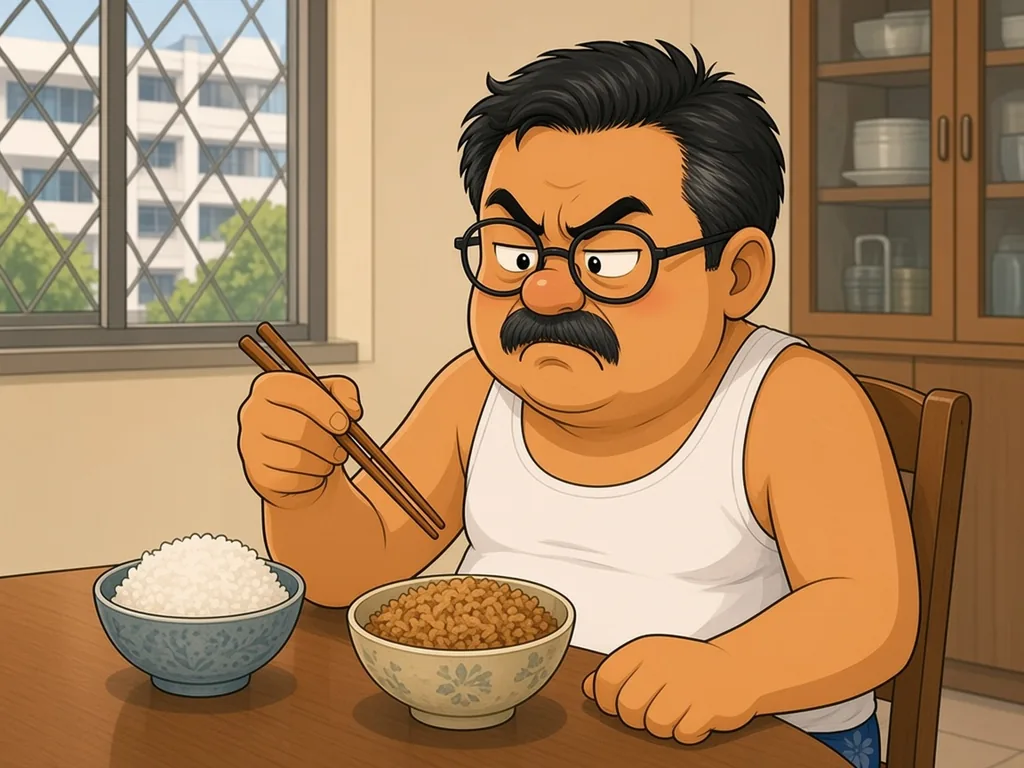
The health screening report comes back. The doctor says, "Eat less refined carbs, try brown rice." You go home, cook a full pot of brown rice, and the whole family looks at their bowls like you've served them birdseed. "So hard to chew!" "Why got smell?" "Can we go back to normal rice?"
Your guide once again is Kiasu Ah Huat, our (fictional) everyday Singaporean who reads the fine print so you don't lose out. Look out for "Ah Huat's Kiasu Tip" along the way. Everything below comes from HealthHub, the Health Promotion Board's health portal. This is general information, not medical advice — if you have diabetes or another condition, follow your doctor or dietitian.
What's the actual difference?
HealthHub's brown rice article explains it simply:
- White rice has had its hull, bran and germ removed. Because the bran contains a small amount of oil that can turn rancid, rice is polished to prolong its shelf life — but this also strips away nutrients.
- Brown rice is unpolished: only the hull is removed, so the bran and germ stay. That makes it a wholegrain.
HealthHub's wholegrains article adds that the bran is rich in fibre, B vitamins, minerals and phytochemicals; the germ is packed with B vitamins, vitamin E and trace minerals; and the endosperm is mainly carbohydrate and protein. Refining removes the bran and germ.
Side by side
| White rice | Brown rice | |
|---|---|---|
| What's removed | Hull, bran and germ (polished) | Only the hull |
| Energy, carbs, protein | Similar amounts | Similar amounts |
| Vitamins, minerals, fibre | Lower | Higher |
| Blood sugar | Refined; can cause a quicker rise | More gradual rise than refined versions |
| Taste and texture | Soft, familiar | Nutty flavour, chewy texture |
| Cooking | The usual | More water and longer cooking; optional soaking |
| Shelf life (uncooked) | Longer — that's why it's polished | Up to 6 months at room temperature |
| Price | Usually cheaper | Often costs more (see below) |
Same calories, so why bother?
Fair question. HealthHub says white and brown rice contain similar amounts of energy, carbohydrates and protein. So brown rice isn't a magic "low-calorie" rice. The difference is what comes along with it:
- More vitamins, minerals and fibre.
- HealthHub says a diet rich in wholegrains such as brown rice may lower the risk of heart disease, diabetes and certain cancers, and can help with weight management.
- On My Healthy Plate, HealthHub says wholegrains keep you feeling fuller for longer and reduce the need for snacking, and can help people with diabetes control their blood sugar.
Ah Huat's Kiasu Tip: Switching to brown rice but still eating three bowls? Same carbs, lah. The portion matters as much as the colour.
What about blood sugar?
HealthHub's Diabetes Hub page on understanding carbohydrates says:
- There's no need to avoid carbohydrates — they're the main source of energy and should be part of a healthy eating plan, including for people with diabetes.
- Starches should make up ¼ of your plate.
- Wholegrain choices such as brown rice give a more gradual rise in blood sugar than refined versions such as white rice.
- Fibre can slow carbohydrate digestion and glucose absorption, for better blood sugar control.
My Healthy Plate puts it the same way: fill a quarter of your plate with wholegrains like brown rice, half with fruit and vegetables, and a quarter with lean meat and others.
Why is brown rice more expensive if it's less processed?
Ah Huat asked this too. HealthHub gives two reasons:
- Scale. White rice is in higher demand, so it's produced on a larger economic scale, which makes brown rice look like a premium product.
- Shorter shelf life. The oil in brown rice's bran means it keeps for less time, so more resources go into preserving its quality during transport and storage.
HealthHub expects that if demand for brown rice grows, its price will fall.
How to switch without a family revolt
HealthHub's wholegrains article has a very practical tip: "Mix brown rice with white rice when you are cooking for your family." It also suggests trying different wholegrains — once you get used to it, you'll notice a subtle, pleasant nutty flavour.
Ah Huat's gentle plan (his own idea, not an official schedule): start with a small portion of brown rice mixed into the white, and increase it slowly over a few weeks as the family gets used to the texture.

Cooking brown rice
HealthHub says cooking brown rice is similar to white rice, with the extra step of soaking. Follow the instructions on the rice package for water and time. Its rice cooking chart gives, for brown rice: soak 0.5 hours (if you prefer softer rice), 2 cups of water per cup of rice, and 35–40 minutes of cooking. As a rule of thumb, more water means softer rice. A rice cooker with brown rice water markings helps — Ah Huat covers that in his guide to choosing a rice cooker.
Ah Huat's Kiasu Tip: Mixing brown and white? The brown rice wants more water and time. Ah Huat soaks the mix first and starts with a small amount of brown, then adjusts water to the family's taste.
Storing rice
From HealthHub:
- Uncooked brown rice: keep in pest-proof containers with lids, up to 6 months at room temperature, or in an airtight container in the fridge to keep it longer. Use first-in, first-out.
- Cooked rice (any colour): cool within an hour of cooking (divide big batches to cool faster), store airtight in the fridge below 8°C, keep for no more than two days, and reheat only once, until steaming hot. HealthHub warns that cooked rice stored wrongly can harbour the bacterium Bacillus cereus.
Our picks
Paiseh, no pick yet. We haven't tested rice cookers hands-on. We're researching and comparing models from spec sheets and owner reviews before we recommend anything for Singapore homes. Rather than show a placeholder link, here's where our recommendation will go:
Product pick coming soon
We'll add a recommendation here once we're confident in it.
Pros
- Recommendation coming soon
Cons
- Not yet published — check back soon
Ah Huat's white-vs-brown checklist
Screenshot this and stick it beside the rice cooker — Ah Huat would.
- Brown rice has similar calories, but more fibre, vitamins and minerals.
- Rice and other starches: about ¼ of the plate.
- Start by mixing brown into white, then increase slowly.
- Brown rice: soak, more water, longer cooking.
- Uncooked brown rice: 6 months at room temperature, or airtight in the fridge.
- Cooked rice: cool within 1 hour, fridge below 8°C, max 2 days, reheat once.
- Diabetes or other conditions? Ask your doctor or dietitian.
Looking for more? Ah Huat has also done his homework on rice cookers and food storage containers. Get these right and your home stays shiok — and so does your wallet.