
How to Choose Food Containers in Singapore (Kitchen Storage Guide)
A kiasu, no-nonsense guide to food containers and kitchen storage for Singapore homes — plastic, glass and stainless steel, reading plastic codes, microwave safety, why takeaway tubs are single-use, and storing leftovers safely in the fridge and freezer, with tips from Kiasu Ah Huat.
Updated 24 October 2026
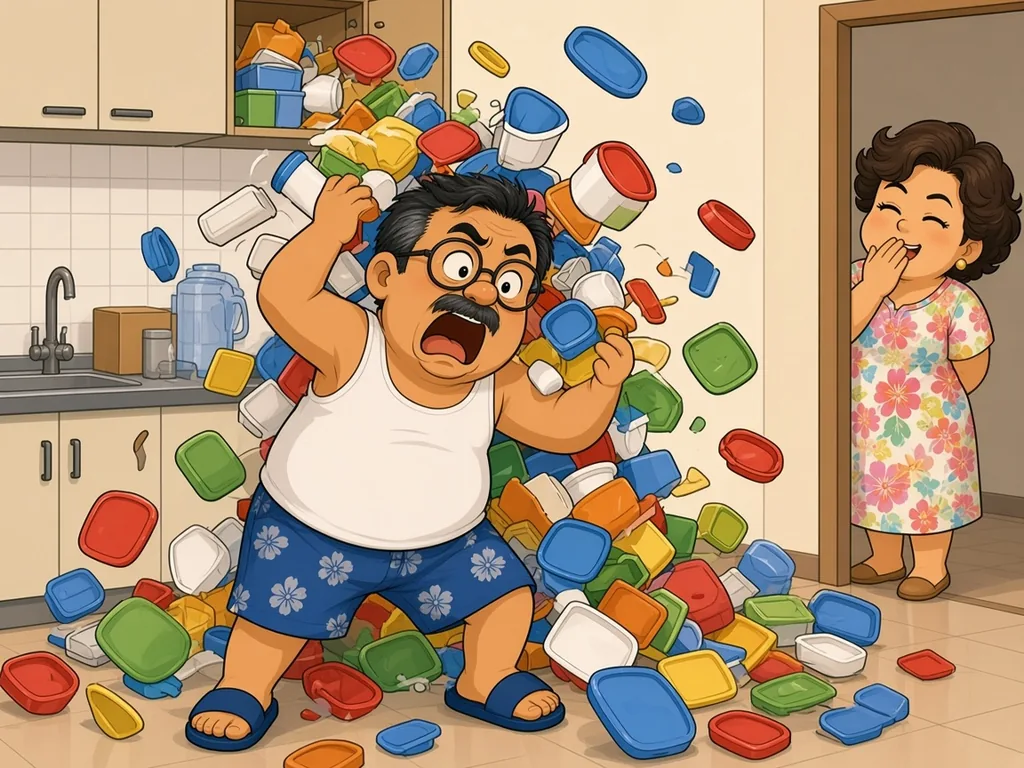
Open the kitchen cupboard and... avalanche. Takeaway tubs from last month's zi char, ice-cream tubs now holding curry, a dozen lids that fit nothing, and that one container whose lid went missing during Chinese New Year. Meanwhile the fridge is a Jenga tower of mismatched boxes. Before you buy a shiny new set because it's on offer, let's work out what's actually safe and useful, so you don't kena con.
Your guide once again is Kiasu Ah Huat, our (fictional) everyday Singaporean who reads the fine print so you don't lose out. Look out for "Ah Huat's Kiasu Tip" along the way.
The main container materials
| Type | Good for | Microwave? | Things to know |
|---|---|---|---|
| Reusable plastic | Everyday leftovers, lunch boxes | Only if labelled microwave-safe (SFA) | Replace when cloudy, discoloured, cracked or heavily scratched (SFA) |
| Glass | Leftovers, reheating, seeing what's inside | USDA suggests a microwave-safe glass or ceramic dish for reheating; check the label | Check the label for oven and freezer use too |
| Stainless steel | Cold storage, dry goods, lunch boxes | No: metal pans aren't safe in the microwave (USDA) | Can't see inside; check the lid seal |
| Takeaway tubs | The meal they came with | Only if labelled microwave-safe, and not reused for microwave heating (SFA) | Disposable, designed for single use (SFA) |
| Styrofoam (polystyrene) | Takeaway only | No (SFA) | Not for food over 100°C (SFA) |
Read the code on the bottom
Most plastic containers have a small number or letters inside a triangle of arrows. The SFA explains that this is the Plastic Identification Code, usually found on the base or side, which tells you the type of plastic. Manufacturers mark it voluntarily. Of the common types, SFA describes polypropylene (PP) as strong, tough and heat resistant, and used for reusable microwaveable ware.
What about chemicals moving from the plastic into food? SFA says the amount depends mainly on the type of food, the temperature and how long they're in contact. With proper use, levels are insignificant or very low and pose no health risk, even after long-term use. Singapore's Food Regulations also require imported food packaging not to transfer harmful substances to food. The key phrase is "proper use", which is what the rest of this guide is about.
Worried about BPA? The US FDA says BPA is safe at the current levels occurring in foods, based on its ongoing safety review.
Ah Huat's Kiasu Tip: Flip the container over before you buy. No microwave-safe label, and you plan to reheat in it? Put it back. Pretty colours don't count as a safety label.
Microwave rules
The SFA's advice on plastics and the microwave:
- Only use plastic containers labelled microwave-safe. If in doubt, or you can't find the manufacturer's instructions, don't microwave it.
- Cold or freezer storage tubs, such as yoghurt, margarine and ice-cream tubs, aren't made for heating, because they aren't heat stable.
- Only use cling film designated for microwave use, and don't let it touch the food.
Styrofoam is a separate case. SFA says styrofoam is not microwaveable and isn't suitable for food over 100°C. For hot food, SFA recommends heat-resistant containers such as PP.
The USDA's microwave guidance adds a few more:
- Use only cookware labelled for microwave use.
- Don't use metal pans, containers with metallic trim, or anything that's warped or melted.
- When reheating, cover the dish and leave a vent for steam.
Reuse, replace, or throw?
SFA is clear on what's single-use:
- Takeaway containers from eating outlets and commercial food packaging are disposable and designed for single use, not for repeated storage.
- Packaging from microwaveable convenience meals shouldn't be reused for storing or heating food.
- Containers that once held non-food items, like detergent, should never be reused for food.
- Reusable plastic containers should be replaced when they turn cloudy or discoloured, or when cracks or heavy scratches appear.
SFA also published a 2025 explainer that plastic takeaway containers are safe when used as intended.
Ah Huat's Kiasu Tip: Kiasu doesn't mean keeping every takeaway tub "in case". Those tubs did their job. A small set of proper containers that fit your fridge beats fifty mismatched ones in an avalanche.
Leftovers: containers that help you store food safely
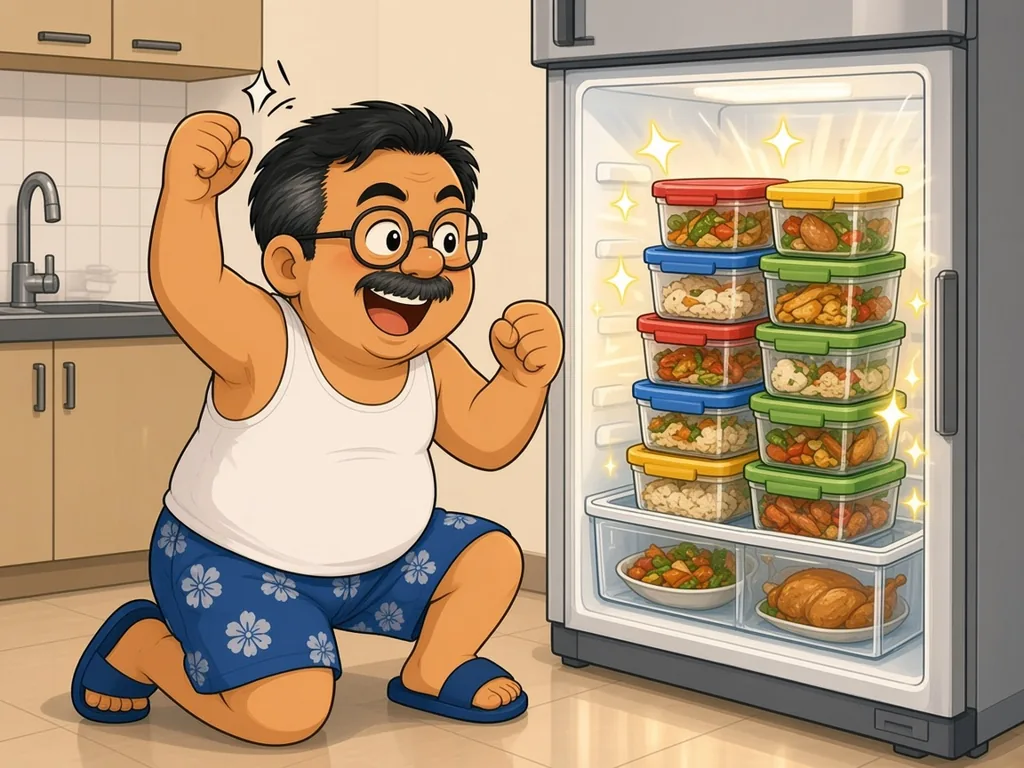
The USDA's leftovers guidance explains why the right container matters:
- Refrigerate leftovers within 2 hours of cooking, or within 1 hour if it's above 32°C (90°F).
- Divide large amounts into shallow containers so they cool faster.
- Cover leftovers, or seal them in airtight containers. This helps keep bacteria out, keeps moisture in, and stops them picking up other fridge smells.
- Eat refrigerated leftovers within 3 to 4 days, or freeze them. Frozen leftovers keep 3 to 4 months; they stay safe longer but lose moisture and flavour.
- Reheat leftovers to 74°C (165°F).
Singapore's own SFA says the same in principle: keep cooked food out of the temperature danger zone of 5°C to 60°C, refrigerate at 4°C or lower, and use smaller portions or shallow pans to cool large amounts quickly.
Freezer storage
According to the USDA's freezing guide, food kept at -18°C (0°F) is always safe, and storage times only affect quality. Freezer burn happens when air reaches the food. It's a quality issue, not a safety one, and proper packaging helps prevent it. USDA also advises:
- Don't stack containers until the food has frozen.
- Thaw food in the fridge, in cold water or in the microwave, never on the kitchen counter.
So for the freezer, look for containers with tight lids that are labelled freezer-safe.
Ah Huat's Kiasu Tip: Before buying a set, measure your fridge shelves and check that the containers nest when empty and stack when full. Label the lid with what's inside and the date. Future Ah Huat will thank you.
Our picks
Paiseh, no pick yet. We haven't tested food containers hands-on. We're researching and comparing products from spec sheets and owner reviews before we recommend anything for Singapore homes. Rather than show a placeholder link, here's where our recommendation will go:
Product pick coming soon
We'll add a recommendation here once we're confident in it.
Pros
- Recommendation coming soon
Cons
- Not yet published — check back soon
Ah Huat's quick checklist before you buy
Screenshot this and bring it to the shop — Ah Huat would.
- Pick the material: reusable plastic, glass or stainless steel.
- Reheating in it? It must say microwave-safe. No label, no microwave.
- Check the plastic code; PP is the heat-resistant one SFA mentions for microwaveable ware.
- Freezer use? Look for a freezer-safe label and tight lids.
- Shallow, airtight containers help leftovers cool fast and stay sealed.
- Measure your fridge shelves; containers should nest and stack.
- Retire takeaway tubs after their one job, and replace cloudy, cracked or scratched containers.
Looking for more? Ah Huat has also done his homework on rice cookers and air fryers. Get these right and your kitchen stays shiok — and so does your wallet.
See also: How to Thaw Frozen Food Safely: Fridge vs Cold Water vs Microwave (and Why Not on the Counter)