
How to Choose a Rice Cooker in Singapore (HDB & Condo Guide)
A kiasu, no-nonsense guide to buying a rice cooker for a Singapore home — basic vs electronic vs induction heating, picking the right size, inner pots, brown rice settings, the SAFETY Mark, and storing leftover rice safely, with tips from Kiasu Ah Huat.
Updated 24 October 2026
The old rice cooker your mother gave you when you got your BTO keys finally gives up: rice half hard, half mushy, and the switch keeps popping. You walk into the electrical shop and suddenly there are cookers with touch panels, a dozen menus, "IH", "pressure", prices from cheap-cheap to "wah, for rice only ah?". Before you queue at the cashier, let's figure out what your household actually needs, so you don't kena con.
Your guide once again is Kiasu Ah Huat, our (fictional) everyday Singaporean who reads the fine print so you don't lose out. Look out for "Ah Huat's Kiasu Tip" along the way.
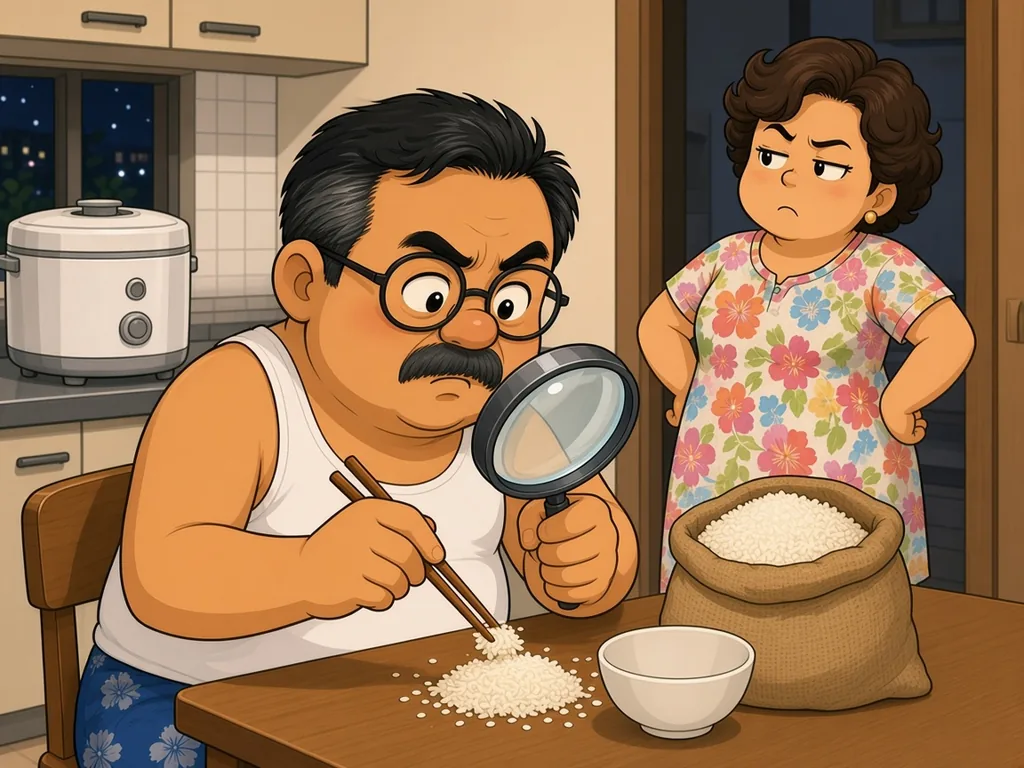
The main types of rice cooker
Rice cookers come in a few broad styles. Here's what each label on the box usually means, without the marketing.
| Type | How it heats / works | Good for | Things to know |
|---|---|---|---|
| Basic (one switch) | Heating plate under the pot; switches to warm when done | Simple white rice, small budgets | Few or no menus; fewer parts to go wrong |
| Electronic / digital | Heating plate plus a control panel with menus and a timer | Families who want brown rice, porridge or timer settings | Check which menus you'll really use |
| Induction heating (IH) | Electromagnetic field makes the pot itself heat up | Even heating around the pot | Use only the inner pot made for that model; check the manual |
| Pressure | Cooks under pressure in a sealed pot | People who want the option | Follow the manual strictly on seals, valves and cleaning |
What does "induction heating" mean? The US Department of Energy explains that induction uses an electromagnetic field so the heat is created within the cookware itself, which gives more precise and even heating on a cooktop. IH rice cookers use the same principle on the inner pot. Whether that makes your rice nicer is a matter of taste, and we haven't found an independent source we trust that compares rice quality across cooker types, so we won't claim one.
Ah Huat's Kiasu Tip: Count the menus you'll actually press. If your family eats white rice every day and porridge twice a year, a dozen extra buttons is just a dozen extra things to pay for.
Size: match it to how your household eats
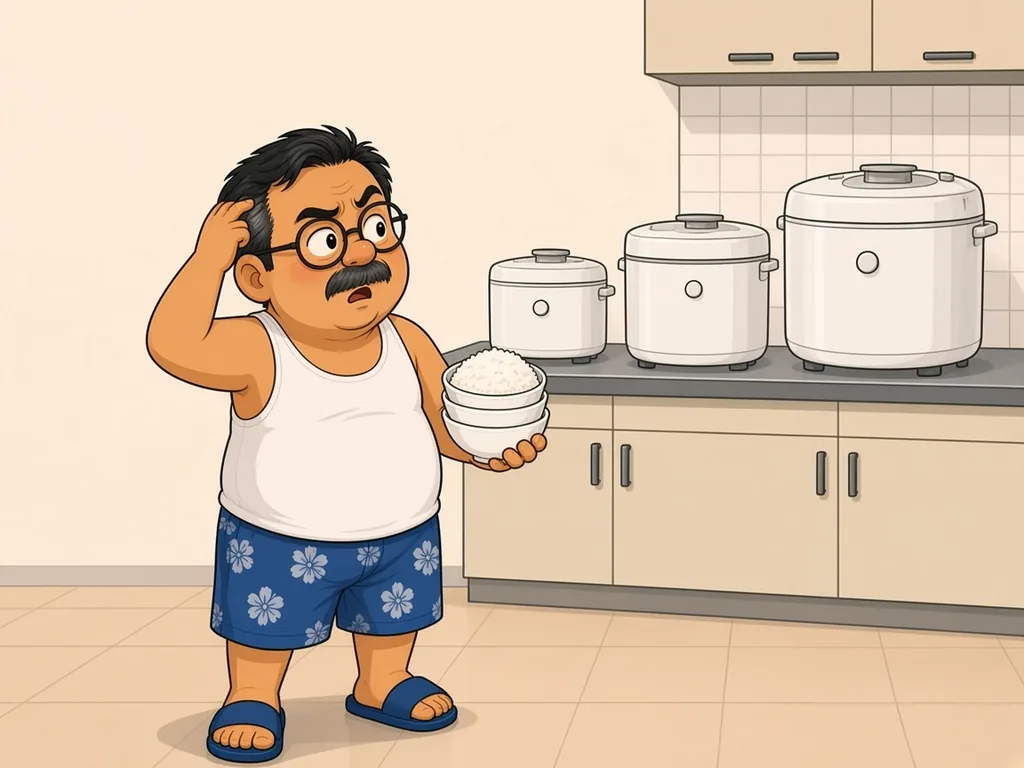
Rice cooker capacity is usually stated in "cups" of uncooked rice, measured with the small cup that comes in the box. Rather than guess, think about:
- How many people eat rice at home, and how often.
- Whether you cook once a day or every meal.
- Whether you sometimes cook for visitors or festive meals.
Then read the manual's stated minimum and maximum amounts, and pick a size where your normal amount sits comfortably between them. Always measure with the cup supplied and fill to the water line the manual tells you to.
Ah Huat's Kiasu Tip: Don't buy the biggest pot "just in case". A huge pot for two people means a huge pot to wash, more counter space gone, and more temptation to cook extra rice that sits around. And leftover rice is where the real kiasu thinking starts (see below).
Brown rice and wholegrains
If you're switching to brown rice, HealthHub has useful advice. It explains that brown rice keeps its bran and germ, with more vitamins, minerals and fibre than white rice. Cooking it is similar to white rice, with an extra soaking step. HealthHub notes you can follow the instructions on the rice package, or use a "brown rice friendly" rice cooker, which indicates the amount of water needed to cook brown rice.
HealthHub also says uncooked brown rice can be stored at room temperature for up to 6 months in pest-proof containers with lids, or in an airtight container in the fridge to make it last longer.
Inner pot: coating and care
The inner pot is the part you touch every day. If it's non-stick coated, you may wonder about PFAS. The US FDA says that in non-stick cookware, PFAS is polymerised and tightly bound, and studies show negligible amounts can migrate to food. Use the rice spatula and cleaning method the manual recommends so the coating lasts. If the pot gets damaged, ask whether a replacement inner pot for your model is sold locally before you decide the whole cooker must go.
Look for the SAFETY Mark
Rice cookers are on the Consumer Product Safety Office's list of Controlled Goods, and CPSO's information booklet also lists pressure cookers, slow cookers and food steamers as examples of Controlled Goods.
According to CPSO's SAFETY Mark page, Controlled Goods must be tested and carry the SAFETY Mark before they can be sold in Singapore. Each mark has a unique 8-digit registration number that you can check at go.gov.sg/safety-mark, by model or registration number. Appliances with a 3-pin plug need two SAFETY Marks: one on the appliance and one on the plug.
Ah Huat's Kiasu Tip: "Imported from overseas, rice cooks better!" Maybe, maybe not. But if it's not on the SAFETY Mark register, it shouldn't be sold here at all. Check the model number before you pay.
Also mind the socket: CPSO says overloading wall socket outlets can cause fire hazards. The rice cooker, kettle and air fryer shouldn't all share one adaptor.
Energy use (and no NEA tick label)
According to NEA's MELS and MEPS page, NEA's tick-rating Energy Label covers specific appliances such as air-conditioners, refrigerators, clothes dryers, televisions, lamps and water heaters. Rice cookers aren't on the list, so there's no tick label to compare. Check the rated wattage on the spec sheet, and remember NEA's general tip to switch appliances off at the power socket when not in use.
Leftover rice: the part people get wrong
This is where Ah Huat gets serious. The Singapore Food Agency (SFA) explains that Bacillus cereus bacteria can form spores that survive cooking and reheating, and one of the toxins it produces, which causes vomiting, is associated with rice and starchy food. SFA calls 5°C to 60°C the "temperature danger zone" and advises that food not eaten straight away should be refrigerated at 4°C or lower, or kept warm at 60°C or higher. Reheating may not remove all the toxins.
HealthHub's advice on storing cooked rice:
- Never store cooked rice at room temperature.
- Cool freshly cooked rice within an hour, dividing large amounts into smaller portions to cool faster.
- Store it in an airtight container in the fridge below 8°C.
- Don't keep cooked rice longer than two days, and don't reheat it more than once.
- Reheat refrigerated rice until steaming hot.
What about the cooker's "keep warm" mode? SFA's rule is to keep food warm at 60°C or higher, but we couldn't find an official source on what temperature cookers' keep-warm modes actually hold, so check your manual for how long the maker recommends keeping rice warm.
Ah Huat's Kiasu Tip: Leftover rice from dinner? Don't leave it on the counter "to cool" until you remember at midnight. Portion it out, let it cool quickly, and into the fridge within the hour.
Our picks
Paiseh, no pick yet. We haven't tested rice cookers hands-on. We're researching and comparing models from spec sheets and owner reviews before we recommend anything for Singapore homes. Rather than show a placeholder link, here's where our recommendation will go:
Product pick coming soon
We'll add a recommendation here once we're confident in it.
Pros
- Recommendation coming soon
Cons
- Not yet published — check back soon
Ah Huat's quick checklist before you buy
Screenshot this and bring it to the shop — Ah Huat would.
- Pick the type: basic, electronic, induction heating (IH) or pressure.
- Count the menus you'll really use.
- Choose a size for how your household eats, using the manual's minimum and maximum amounts.
- Eating brown rice? Look for a cooker that shows brown rice water levels.
- Check the inner pot coating, and whether replacements are sold locally.
- Look for the SAFETY Mark on the cooker and the plug, and check the model on go.gov.sg/safety-mark.
- No NEA tick label for rice cookers: compare rated wattage instead.
- Plan for leftovers: cool within an hour, fridge below 8°C, eat within two days, reheat only once.
Looking for more? Ah Huat has also done his homework on air fryers and food containers to store that leftover rice properly. Get these right and your rice stays shiok — and so does your wallet.
See also: White Rice vs Brown Rice: What's Really Different (and How to Switch Without a Family Revolt)